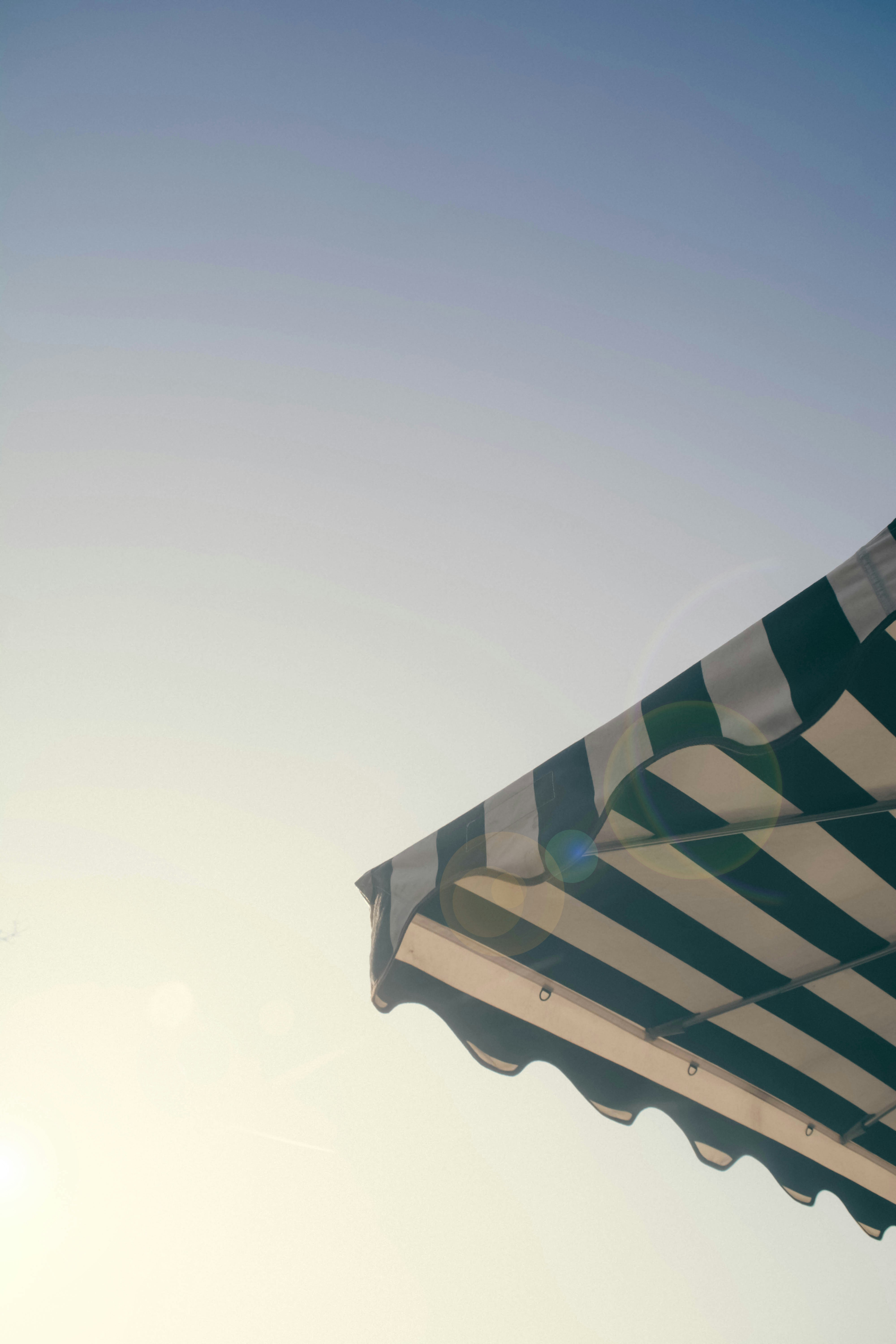
In solution-dyed polyester, color is introduced before the fiber is made. Pigments are mixed into the molten polyester polymer, and the colored material is then pushed through a spinneret to form continuous filaments. As a result, color is distributed throughout each fiber rather than added later to the surface of a finished fabric. This process differs from conventional surface dyeing, in which finished fibers or fabric are immersed in dye and color is applied after the polymer has been formed. The distinction matters for outdoor awnings, which are regularly exposed to intense sunlight and changing weather.
Because pigment runs through the fiber, ordinary surface wear or exposure is less likely to remove the visible color layer. Solution-dyed fabrics can therefore offer strong colorfastness and improved resistance to fading caused by ultraviolet light compared with many conventionally dyed alternatives. They may also retain their appearance through repeated use and cleaning. These are useful advantages for awnings, where large areas of fabric remain exposed for long periods. However, the degree of fade resistance varies with the pigments, yarns, fabric design, and conditions of use; solution dyeing does not make a textile immune to sunlight or aging.
Polyester is also well suited to awning applications because it combines useful strength with relatively low weight. Its fibers can support durable fabric constructions without making the finished covering unnecessarily heavy. Polyester generally holds its shape well, helping an awning maintain dimensions when tensioned, and it dries relatively quickly after rain compared with more absorbent materials. Those characteristics can support practical handling and outdoor use. Still, no single fiber property guarantees reliable performance. The weave or knit, fabric weight, yarn quality, coatings, water-repellent treatments, seams, and installation all affect how an awning performs. Buyers should assess the complete fabric construction and its finishing, not rely on the polyester fiber or dyeing method alone.
Outdoor awning fabric must withstand several stresses at once. Ultraviolet exposure can fade colors and weaken fibers, while rain, humidity, and airborne debris create conditions for mildew and staining. Wind and movement cause abrasion, and an extended awning may remain under repeated tension for long periods. Performance therefore depends not only on the fiber itself but also on construction, finishing, installation, and care. Solution-dyed polyester is often considered for outdoor use because color is introduced during fiber production, which can support color retention; however, specifications and test results should still be checked for the particular product.
Weave and yarn size shape how fabric performs. A tighter weave can provide greater shade and help limit wind-driven rain, while a more open construction may allow more airflow. Larger or stronger yarns and greater fabric weight can improve resistance to abrasion and handling, although added weight may affect operation and support requirements. Coatings and water-repellent treatments can help water bead or shed from the surface, and may make cleaning easier. These finishes vary: some reduce breathability, alter the fabric’s hand, or require particular cleaning methods. A coating may also change how the textile folds, ages, or responds to prolonged sun exposure.
Water resistance is not the same as waterproofing. Water-resistant fabric can delay penetration under defined conditions, but seams, stitching, fabric angle, and sustained or wind-driven rain can still allow water through. For a sheltered patio, airflow and comfortable shade may matter more than maximum water resistance; in a wet or highly exposed setting, water-shedding performance may take priority. Compare technical data for UV resistance, water resistance, abrasion, colorfastness, and mildew-related performance, noting the test methods and conditions rather than relying on broad claims. Select a fabric suited to the local climate, awning design, slope, exposure duration, and expected maintenance. Where possible, review independent test results or samples, and confirm that recommended care and installation practices match the intended use.
Begin by checking whether a manufacturer has direct experience supplying textiles for outdoor use. Ask about its history with awning fabrics and how it manages exposure to sunlight, moisture, temperature changes, and routine cleaning. Experience alone is not proof of performance, but it can indicate familiarity with the requirements and trade-offs involved in selecting a durable material.
Review production capabilities alongside quality-control procedures. Find out whether yarn sourcing, dyeing, weaving, finishing, and inspection are managed in-house or through partners, and how the manufacturer controls consistency between production lots. Ask what measurements are checked, how often tests are conducted, and what happens when a batch falls outside specification. Reliable answers should be supported by written procedures or records.
Request technical data sheets, the names of test methods, and current results for properties relevant to your project. Depending on the application, these may include colorfastness, tensile strength, tear resistance, water repellency, and dimensional stability. Request color references and sample swatches, then compare samples under realistic lighting and conditions. Confirm that test results apply to the specific fabric construction and finish being quoted, rather than to a general product range.
Discuss customization in practical terms: available colors and patterns, fabric weights, coatings, widths, and constructions. Clarify which options are standard and which require a custom run. Ask about minimum order quantities, production lead times, repeat-order availability, packaging, and shipping arrangements. If a project has unusual dimensions or performance needs, assess whether the supplier can help interpret specifications and recommend suitable options without overstating what the material can do.
Finally, verify performance claims with documentation. Descriptions such as “fade-resistant” or “weatherproof” are broad and may not define test conditions, thresholds, or expected service life. Ask what each claim means for the exact product, how it was measured, and whether limitations apply. A dependable manufacturer should provide clear, product-specific information and explain any uncertainty. Comparing these details across suppliers makes it easier to judge value, reduce specification gaps, and select fabric that matches the intended awning environment.
Start with the awning’s design and intended use when comparing solution-dyed polyester fabrics. A retractable patio awning may need a lighter, flexible material that can roll smoothly, while a fixed canopy may accommodate a heavier fabric. Consider local exposure: strong, prolonged sun increases the value of color retention and ultraviolet resistance, while frequent rain, wind, coastal air, or seasonal temperature changes may affect the preferred construction and required care. Also decide how much shade and privacy are needed, and whether the fabric’s color, pattern, and surface finish suit the building. These choices influence comfort as well as the appearance of the outdoor space.
Before purchasing, review the fabric manufacturer’s installation instructions and confirm compatibility with the awning frame, rollers, seams, and any planned finishing process. Fabric weight, width, and flexibility can affect fit and operation, and unsuitable seams or treatments may compromise durability. Ask whether the material is intended for the specific awning system and whether professional installation is recommended. Cleaning expectations matter too: assess how readily nearby trees, dust, pollution, or birds may soil the fabric, and check which cleaning products and methods the manufacturer permits. Regularly remove loose debris, clean only as directed, and allow the fabric to dry according to guidance before retracting or storing it.
Compare the purchase price with expected service life rather than choosing solely by initial cost. A more expensive solution-dyed polyester option may offer stronger color retention and reduce the frequency of replacement, but actual performance depends on exposure, construction, installation, and maintenance. Review warranty terms carefully, including coverage limits, exclusions, and any care or installation conditions. Routine attention—such as keeping the fabric clear of debris, addressing dirt promptly with approved methods, and following drying recommendations—can help preserve its appearance and function. Properly matching the material to the awning and local conditions, then installing and caring for it correctly, supports better long-term value.